Taxonomy in Science: How It Organizes Knowledge
- Yatharth K
- May 25, 2023
- 3 min read

Updated: Apr 1, 2024
What is Taxonomy?
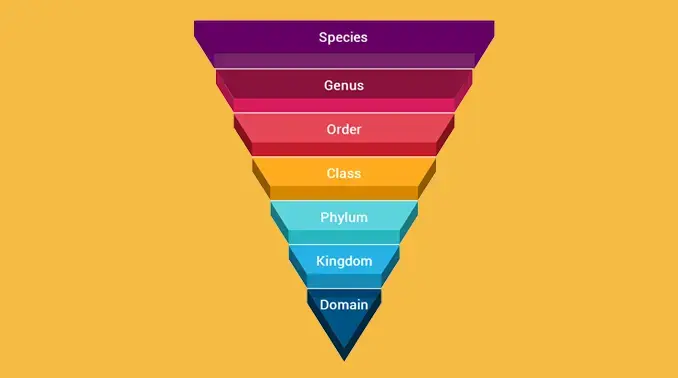
If you've ever wondered how scientists keep track of all the living things in the world, wonder no more. The answer is taxonomy, a system of organizing knowledge that is as boring as it sounds. Just kidding, it's pretty cool (if you're into that kind of thing). At its core, taxonomy is the science of classification. In other words, it's the process of putting things into groups based on their characteristics. Think of it like sorting laundry, but instead of whites and darks, you're sorting plants and animals. But why bother? Well, without taxonomy, we'd have chaos. Imagine a world where every living thing had a different name, and no one could agree on what to call anything. It would be like trying to have a conversation with a toddler, except the toddler is a whole species of animal. Not exactly ideal. In short, taxonomy is like the organizational guru of the scientific world. It keeps everything in its place and makes sure everyone knows what's what. Plus, it's kind of fun to say. Taxonomy. Tax-o-nomy. Try it.
How is Taxonomy Used?
Well, let me tell you, taxonomies aren't just for nerds with pocket protectors. They're essential to organizing and categorizing all the knowledge in science. Without taxonomy, scientists would be left with a big pile of information that nobody could make sense of. And let's be honest, nobody wants that.
So, how do scientists use taxonomy? It all starts with classification. By grouping similar organisms, substances, or concepts, scientists can better understand how they relate to each other. This helps to create a systematic framework that can be used to study the world around us. Taxonomy is also crucial when it comes to identifying new species. Without an organized system for naming and classifying different organisms, scientists would struggle to determine what's what. This could lead to confusion, misidentification, and even the loss of important species. Beyond that, taxonomy plays a key role in research. By using established taxonomic systems, scientists can build upon each other's work and create a more robust body of knowledge. This is especially important in fields like medicine, where taxonomy can be used to classify different diseases and develop new treatments. Overall, taxonomy is an incredibly valuable tool for scientists. Providing a framework for organizing and categorizing knowledge, helps to make science more accessible and understandable to everyone. So, the next time you hear someone talking about taxonomy, don't dismiss it as just another boring scientific term. It's a pretty big deal.
What are the Different Types of Taxonomies?
Oh boy, here we go, more talk about taxonomy. But wait, did you know that there are different types of taxonomies? Yeah, I didn't think so. First off, there's hierarchical taxonomy, which is the most common type. This one is pretty straightforward. It organizes things into a hierarchy or levels. So, for example, all animals are grouped together and then subdivided into mammals, reptiles, birds, and so on. Then, there's faceted taxonomy, which is like a choose-your-own-adventure book for classifying things. It allows you to categorize things based on a variety of different characteristics, or facets, rather than just one. This can be helpful if you're trying to find something that fits multiple categories or if you just can't decide on one. Next up, there's alphabetical taxonomy. This one is pretty self-explanatory. Everything is organized in alphabetical order. I guess if you like the ABCs, this one's for you. And finally, there's numerical taxonomy. This one is used in microbiology to classify bacteria. It's based on a set of characteristics and uses statistical methods to group them. It's like playing a complicated game of Tetris with bacteria. So, there you have it. A few different types of taxonomies to add some spice to your science class.
Summary
To summarize, the importance of taxonomy in science is as a tool for organizing knowledge. Taxonomy is the process of classifying organisms based on their characteristics and relationships. Without taxonomy, scientists would struggle to understand how different organisms relate to each other, identify new species, and conduct research. There are different types of taxonomies, including hierarchical, faceted, alphabetical, and numerical, that can be used to classify different things. Overall, taxonomy is a valuable tool that helps make science more accessible and understandable to everyone.


Comments